The Office of Postdoctoral Affairs annually awards the Faculty Mentor of the Year Award to a faculty member who has engaged in exceptional mentoring of postdoctoral scholars.
2025 Award Recipient
Megan Roberts, PhD
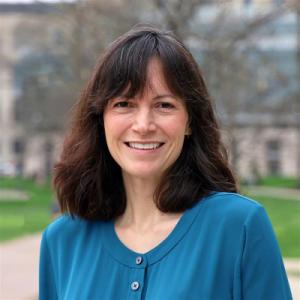
Associate Professor, Division of Health Behavior and Health Promotion, College of Public Health
Dr. Roberts' research focuses on tobacco use among historically marginalized populations, particularly adolescents and young adults, racial/ethnic minorities and individuals living in rural areas. The ultimate aim is to better understand the factors that contribute to tobacco initiation and tobacco-related disparities, as well as how such factors can be targeted for prevention.
Broadly informed by the socioecological model, her work considers factors at many levels of analysis, including those at the individual, interpersonal and community/environmental level. Much of her research focuses on tobacco regulatory science at the local, state and federal level, such as retailer licensing and Tobacco 21. Her research methods include longitudinal surveys, ecological momentary assessment (EMA), focus groups and community mapping.
2024 Award Recipient
Davita Watkins, PhD
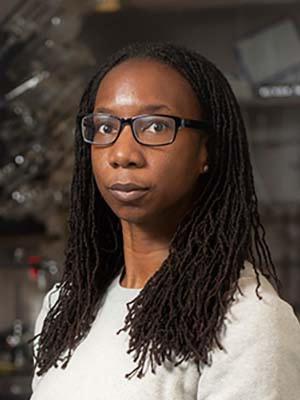
Associate Professor, Department of Chemistry and Biochemistry, College of Arts and Sciences
A native of Memphis, Tennessee, Dr. Davita Watkins obtained her Bachelor of Science in Chemistry and Anthropology from Vanderbilt University in Nashville, Tennessee. As an undergraduate, she conducted research under the guidance of Dr. David Hercules and later Dr. Grace Zoorob. There, she cultivated an interest in synthetic development and analytical characterization methods. After working briefly as Lead Chemical Analyst for a bioanalytical company, she obtained a PhD in Chemistry from the University of Memphis under the tutelage of Dr. Tomoko Fujiwara. As a doctoral candidate, she developed and established multi-step synthetic methods for a series of stimuli-responsive molecules and polymeric materials, demonstrating potential applications in phase transfer catalysis, catalytic control, and drug delivery. As a postdoctoral researcher at the University of Florida in Gainesville, Florida with Dr. Ronald K. Castellano, she developed novel self-assembling organic materials for photovoltaic applications. In 2014, she began her independent academic career at the University of Mississippi. Her research focuses on establishing design guidelines towards novel functional materials with tunable properties through molecular self-assembly. The well-defined, programmable nanostructured materials produced in her laboratory are designed to be used in various applications, ranging from therapeutics to electronic devices. Within her first year at the university, she received the Oak Ridge Associated Universities (ORAU) Ralph E. Powe Award for her studies of noncovalent interactions in organic semiconducting devices. In the early part of 2017, she earned a National Science Foundation CAREER Award to catalyze the growth and sustainability of her novel research program that exploits sigma-hole interactions to optimize organic electronic materials. She has been named a 2018 Young Investigator by the Polymeric Materials: Science and Engineering (PMSE) Division branch of the American Chemical Society (ACS) and was selected as an Emerging Investigator by the Royal Society of Chemistry Journal of Materials Chemistry C. In 2021, she was named a Trailblazer by Chemical & Engineering News (C&EN) and an International Union of Pure and Applied Chemistry (IUPAC) Young Observer. In 2022, she was named a Rising Star by ACS Women Chemists Committee (WCC) for her contributions to the field and service to the organization. She is currently on the editorial advisory board for ACS Omega and the Journal of Physical Organic Chemistry. Alongside her research efforts, Dr. Watkins has been an active voice for initiatives to increase minorities and women in STEM. She developed and directed a federally funded (National Science Foundation) four-week science initiative for minority women called Operation ICB (I Can Be) to introduce high school scholars to the laboratory setting and encourage them to pursue STEM-related degrees and careers.
2023 Award Recipients
Jonathan Jacobs, PhD and Eduardo Reategui, PhD
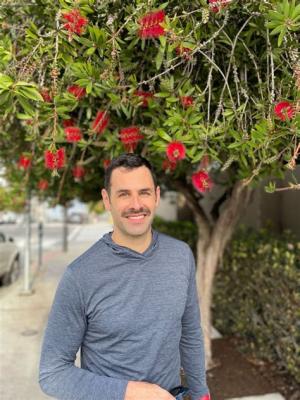
Jonathan Jacobs, PhD, Associate Professor, Department of Plant Pathology, College of Food, Agricultural and Environmental Sciences
Jonathan M. Jacobs (he/him/his) is an expert in tropical plant disease and molecular host-bacterial interactions. graduated with a B.S. (triple major in Bacteriology, Genetics and Spanish) and Ph.D. (Major: Plant Pathology, Minor: Microbiology) from the University of Wisconsin—Madison. For his postdoctoral research, Dr. Jacobs was a NSF Postdoctoral Fellow in Biology at the Institut de Recherche pour le Développement in Montpellier, France and a USDA NIFA Postdoctoral Fellow at Colorado State University. He was also awarded a Fulbright Scholar Award to perform research at the Université Catholique de Louvain, Belgium. He joined Ohio State in 2018 as a Discovery Theme Hire in the Infectious Disease Institute and is an Assistant Professor of Emerging Infectious Disease Ecology in the Department of Plant Pathology. He currently serves on the editorial board for the journal Rice. In his free time, Jonathan enjoys swing dancing, rock climbing and travel.
Eduardo Reategui, PhD, Associate Professor, Department of Chemical and Biomolecular Engineering, College of Engineering
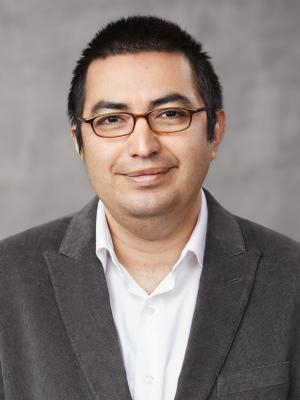
Dr. Eduardo Reátegui is an associate professor of chemical and biomolecular engineering and a member of the Molecular Biology and Cancer Genetics Program at the James Comprehensive Cancer Center. He obtained his Ph.D. at the University of Minnesota in 2012 and his BS degree in Engineering from the Universidad Nacional de Ingenieria in Lima, Perú. His doctoral thesis focused on the development of inorganic biomaterials and polymeric nanointerfaces with tunable properties for reversible encapsulation of proteins and cells. After graduation, he was a postdoctoral research fellow at Harvard Medical School and the Massachusetts General Hospital Cancer Center in Boston. Professor Reátegui bridges engineering disciplines with biology to exploit complex cellular interactions and mechanisms towards the goal of solving unmet needs in life sciences and medicine. The Reátegui research group focuses on the development of translational microtechnologies combining microfluidics, biomaterials, and molecular imaging techniques to help better diagnose, study, and treat cancer and infectious diseases. Currently, Professor Reátegui is working on expanding the applications of circulating biomarkers not only as a diagnostic tool, but also exploring their role in cancer metastisis and cell-to-cell communication with the immune system.
2022 Award Recipient
Bruce Weinberg, PhD
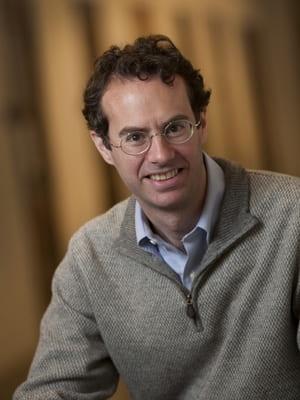
Eric Byron Fix-Monda Endowed Professor, Department of Economics, College of Arts and Sciences
Dr. Weinberg is an endowed professor in the Department of Economics whose research focuses on changes in the wage structure and family and neighborhood determinants of youth outcomes. His research has been supported by the NIH, NSF, and Kauffman, Sloan, and Templeton Foundations. He has advised policy makers at a variety of levels and served on two working groups of the Advisory Committee to the NIH Director focused on the next generation of the biomedical research workforce. In one of his recent publications published in Nature, he shows using national datasets that the gender gap in the number of papers produced in the sciences can be attributed to women receiving less credit for their contribution and not to the productivity differences between men and women.
Over the last two decades, he has mentored 59 graduate students and postdoctoral scholars, 29 of whom have subsequently gone on to secure tenure-track positions at leading institutions across the world. He is a strong advocate for diversity and inclusion and has promoted the retention and recognition of women scholars in the field of economics throughout his research career. He is committed to ensuring the success of his mentees and devotes substantial time to their mentorship, professional and career development, and to expand their professional networks for research collaborations and career pursuits.
2021 Award Recipients
Eben Kenah, PhD
Associate Professor of Biostatistics
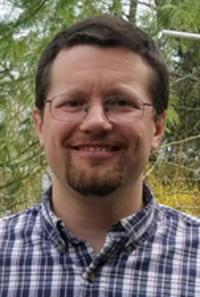
Prior to joining Ohio State, Dr. Kenah held academic positions at the University of Florida and the University of Washington. Dr. Kenah’s primary research interest is in infectious disease epidemiology. He has developed novel statistical methodologies based on causal inference, survival analysis, and statistical inference for improved study design and analysis of epidemic data. Besides his prolific academic credentials, he has also gained experience infield epidemiology as a biostatistical consultant at ICDDR,B in Bangladesh. Dr. Kenah has been a continuous grantee of the National Institutes of Health (NIH) including multiple R01s.
Grzegorz (Greg) Rempała, PhD
Professor of Biostatistics and Mathematics
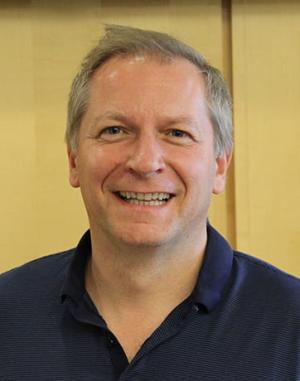
Dr. Rempała was the Interim Director of the Mathematical Biosciences Institute (MBI) from September 2016 to December 2017. He was one of the leading figures at Ohio State in the Infectious Diseases Institute’s pandemic response modeling during the COVID-19 pandemic. His mathematical interests are classical probability theory, mathematical statistics, and the theory of stochastic complex systems. He also works in computational genomics and bioinformatics, as well as mathematical epidemiology. Dr. Rempała has been a continuous grantee of the National Science Foundation (NSF) and the National Institutes of Health (NIH). He is also an elected fellow of the Collegium of Eminent Scientists of Polish origin at the Kosciuszko Foundation in New York.
Wasiur Khuda Bukhsh stressed their commitment to fostering independent research among their advisees, their dedication to helping their mentees connect with other researchers, and their willingness to guide trainees along their larger career paths.
Being nominated for this award is an indication of high-quality mentoring, For this reason, we would like to honor the nominees by listing them here.
2020 Award Recipient
Kentaro Fujita, PhD
Department of Psychology
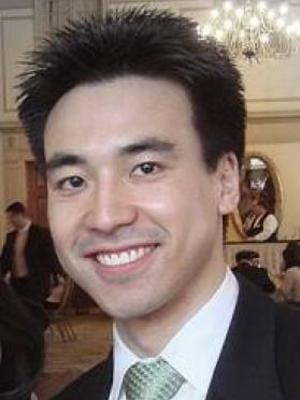
Dr. Fujita was nominated by a former postdoctoral advisee, Laura Wallace. Dr. Fujita works with his mentees to promote their overall professional development, establish a strong community in the research group, connect his advisees with other researchers in the field, and guide them on their career trajectories.
2019 Award Recipient
John Beacom, PhD
Henry L. Cox Professor of Physics and Astronomy, a Distinguished Professor of Arts and Sciences, and Director of the Center for Cosmology and AstroParticle Physics (CCAPP).
Dr. Beacom is a member of OPA’s Postdoctoral Advisory Council and is the mentor for Presidential Postdoctoral Scholar Dr. Steven Prohira. He was nominated by a group of 14 present and recent CCAPP postdocs, led by Dr. Tim Linden. Dr. Beacom takes a comprehensive approach to mentoring, covering scientific development, communication skills, interdisciplinarity, how to teach and mentor, public outreach, and anything else needed to help people do their best work and grow into scientific leaders. This year alone, four of his postdoc and student mentees are starting faculty jobs.
In 2020 the National Postdoctoral Association (NPA), in partnership with Garnett-Powers & Associates, Inc. awarded John Beacom the Mentor Award. The award recognizes a faculty member or advisor who has engaged in exceptional mentoring of postdoctoral scholars.
2018 Award Recipient
Ponnuswamy Sadayappan, PhD
Dr. Sadayappan was nominated by a former postdoctoral mentee, Dr. Aravind Sukumaran Rajam, who has moved on to a senior engineer position. As an exceptional mentor and advisor, Dr. Sadayappan has guided a number of postdoctoral scholars who have moved onto positions in academia and industry. Dr. Sadayappan has prepared his trainees for academic and non-academic positions by providing them with opportunities for professional development such as improving teaching and communication, learning new technical skills, and honing scientific writing.
2017 Award Recipient
Gerald Frankel, PhD
Dr. Frankel was nominated by four of his postdoctoral mentees, who have articulated the quality of training, support, and mentorship they have received while working in his laboratory. In addition to conducting an extremely productive working atmosphere for his mentees, Dr. Frankel has notably made efforts to enhance the postdoctoral experience for the individuals that nominated him, by providing hands-on experiences for professional and personal development.
2016 Award Recipient
Noah Weisleder, PhD
Associate Professor in the Department of Physiology and Cell Biology in the College of Medicine
Dr. Weisleder was nominated by two of his postdoctoral mentees who articulated the outstanding training, support and mentorship they have received while working in his laboratory. In addition, Dr. Weisleder has been a strong supporter of the Postdoctoral Association and has become involved in other initiatives through the PAC, such as moderating a peer writing group for postdoctoral scholars working on faculty applications. Through his mentorship and involvement, Dr. Weisleder demonstrates his interest and dedication to serve the postdoctoral community at Ohio State.
For more information on various awards and funding for the postdoctoral community at Ohio State visit the OPA's Fellowship and Funding page or the Postdoctoral Awards page.