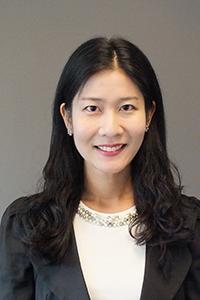
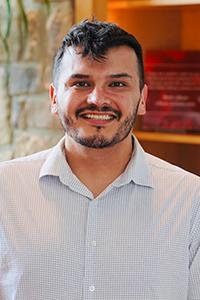
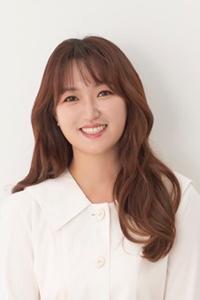
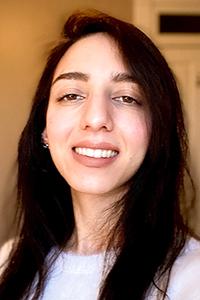
Dr. Susan Yoon (Mentor), Juan Benavides (Mentee), Yujeong Chang (Mentee), and Dr. Oznur Bayar (Mentee)
For National Mentoring Month, here at Ohio State, we wanted to share some mentorship advice from our own mentoring award winner, Dr. Susan Yoon, Assistant Professor of Social Work and her graduate and postdoctoral mentees, Juan Benavides (3rd year Ph.D. candidate), Yujeong Chang (5th year Ph.D. candidate), and Dr. Oznur Bayar (Postdoctoral Scholar).
Dr. Susan Yoon, what role has mentorship played in your own educational and career journey?
Dr. Susan Yoon: Mentorship has been foundational at every stage of my educational and career path. As an immigrant, woman of color, and international scholar, I often navigated spaces where I felt unseen or out of place. The mentors who made the most difference were those who recognized my potential before I fully saw it myself. They offered not only academic guidance but also encouragement, affirmation, and culturally responsive support that helped me persist through moments of self-doubt and isolation. Their belief in me shaped my confidence, widened my opportunities, and helped me become the scholar I am today. These experiences deeply inform the way I mentor now.
For our mentees, Juan, Yujeong, and Dr. Bayar, we have a similar question. What role has mentorship played in your personal or professional growth so far?
Juan Benavides: Mentorship has been the reason I’m still in this program and still see myself as a scholar. As a first-generation, minoritized student, there were moments when the combination of family stress, financial strain, and the demands of a doctoral program made me seriously consider leaving. When I reached out to Dr. Susan Yoon during one of those low points, she immediately made time for me on a weekend, listened without judgment, and helped me reconnect my goals to a path that actually felt possible. That kind of mentoring—seeing me as a whole person, not just a producer of papers—anchored me in the program and shifted how I think about my own potential. Her ongoing support, from research opportunities to simply checking in on how I’m doing, has shaped not only my CV but my sense of belonging in academia.
Yujeong Chang: Mentorship has been central to my development both personally and professionally, and my advisor, Dr. Susan Yoon, has played the most significant role in shaping my identity as a scholar. She is the person who has influenced my thinking about resilience science, pushing me toward clearer conceptualization, attention to ecological and developmental processes, and stronger reasoning about mechanisms and pathways. Her questions consistently push me to refine and take ownership of my conceptual framework, not just for one project but for the broader research program I hope to build. What I value in Susan’s mentorship is her balance of rigor and steadiness. She is conceptually sharp and methodologically strong, yet also calm, warm, and grounded in her approach to supporting students. During my candidacy, her reassurance and empowerment helped me navigate a very stressful process. At the same time, she maintains high expectations and motivates me to meet them. Susan also models the kind of mentor and colleague I hope to become, who is clear in thinking, thoughtful in feedback, committed to student growth, and generous with her time and insight. Her mentorship has shaped not only the direction of my work but also the standard I hold for myself as I move forward in my career.
Dr. Oznur Bayar: Dr. Yoon’s mentorship has shaped my growth in profound and deeply personal ways. Her resilience-based approach has been a steady source of opportunity and comfort since the day I first met her as a mentee during my PhD as an international visiting scholar. In that critical career development phase, she helped me see that growth is built through curiosity and persistence rather than perfection, which strengthened my confidence as a developing researcher. Her guidance has made my current postdoctoral experience grounding and transformative from the very beginning—and continues to do so.
What’s one important lesson you have learned about being a faculty mentor that you want to share with new faculty mentors?
Dr. Yoon: An important lesson I’ve learned is that effective mentoring must be tailored to each individual. Mentees bring unique lived experiences, complex identities, and distinct needs (a one-size-fits-all approach simply doesn’t work!). Creating space for honest conversations, listening without judgment, and validating their experiences is just as essential as offering research guidance or career advice. Mentees thrive when they feel understood, respected, and valued. Mentoring is therefore not only about developing scholars but also about recognizing strengths, cultivating belonging, and supporting resilience.
What is one thing that you appreciate about your mentor?
Juan: One lesson I’ve learned from watching Susan is that mentorship is most powerful when it’s both high expectation and high care. She names the hidden curriculum, pushes us to apply for things we don’t feel “ready” for, and gives very direct feedback—but she pairs that with deep curiosity about our lives, our families, our mental health, and our long-term goals (even when those goals are outside academia). I’ve seen how her willingness to normalize non-linear doctoral journeys, caregiving roles, and self-doubt can literally keep people in the program and change their trajectories. For new faculty mentors, I’d say: don’t underestimate how much it matters to explicitly affirm your students’ strengths and to make room for their full humanity alongside their productivity.
Yujeong: I appreciate Susan’s availability and accessibility. When I need guidance, whether it’s about research projects, a decision I need to make, personal matters, or navigating the program, she consistently makes time and gives her full attention. That reliability has made a significant difference in my ability to move through the doctoral process with confidence. I also value her commitment to student development. She doesn’t just assign tasks; she thinks deliberately about what experiences will actually help me learn and grow as a researcher. Her feedback and expectations are always aligned with building my capacity, not simply completing a project. Finally, I appreciate the example she sets of what strong mentorship and faculty leadership look like. Watching how she approaches her work, supports students, and handles challenges has given me a clear model of the kind of mentor and faculty member I want to be in the future.
Dr. Bayar: What stands out most is how Dr. Yoon brings both intellectual rigor and genuine care to every interaction. She listens carefully, offers thoughtful direction, and creates space for her mentees’ aspirations to flourish. She strikes a rare balance of support and challenge, and working with her consistently leaves me feeling inspired.
Lastly, what advice would you have to give to a graduate student or postdoc starting as a new mentee?
Dr. Yoon: Be open and proactive in communicating your needs, goals, and challenges. Mentoring works best when it is dynamic and bidirectional. Your voice matters: you are not just receiving guidance but actively shaping your own growth.
Juan: One practical tip for mentees is to treat mentoring as a collaborative relationship, not a one-way service. Some of my best conversations with Susan have happened when I came in prepared—sharing where I was stuck, what I was afraid of, and what decisions I needed help with—rather than trying to look “put together.” Being honest about self-doubt or burnout gives your mentor something real to work with; it’s what allowed Susan to help me rethink timelines, set concrete writing goals, and stay in the program when I was close to walking away. So: be proactive, bring an agenda (even a loose one), follow up on what you agreed to do, and be open to being stretched a bit outside your comfort zone. That’s where the growth – and the real impact of mentoring – tends to happen.
Yujeong: My advice is to approach mentoring as an active, collaborative process rather than something passive. Be prepared to articulate your goals, uncertainties, and needs so your mentor has a clear sense of how to support your development. Mentorship works best when you take the initiative in communicating where you want to grow. It’s also helpful to be open to feedback and willing to stretch your thinking. A strong mentor will challenge you, and those moments are often where the most growth happens. Try to view critical feedback as part of building your skills, not as a judgment of your abilities. Also, pay attention to how your mentor works, such as their decision-making, writing, problem-solving, and professional norms etc. Observing those practices is often as valuable as any specific piece of guidance they give. Finally, remember that your role is to build independence over time (which I am still working on). Use the mentoring relationship to develop your own judgment, voice, and direction as a researcher. The goal isn’t just to complete tasks, it’s to become someone who can define and lead your own work.
Dr. Bayar: Be open and intentional with your mentor by sharing your goals, questions, and what you hope to grow toward. When you show up curious and fully engaged, you’ll always leave with something valuable—an insight, a direction, or a new way of thinking. Over time, you’ll realize that the mentor–mentee relationship is one of the most special and impactful interactions people rarely talk about in life.
Ohio State Mentoring Initiative
Strong mentorship has been linked to enhanced mentee productivity, self-efficacy, career satisfaction, and is an important predictor of the academic success. Access resources as graduate students, postdocs and faculty to develop and/or enhance mentor and mentee skills.